AssureLocker Insights
MSME trade finance, the verification & evidence layer, and digital identity — for lenders, anchors, exporters and policymakers.

AssureLocker Team
When an AI Agent Asks for Identity Verification, Who Actually Approves It?
An agent that can request identity verification is only trustworthy if it can never grant that verification itself. Here's how AssureLocker's MCP server keeps consent with the holder — on their own device — no matter what asked for it.

AssureLocker Team
How a Credit Team's AI Agent Checks a Deal — Without Ever Making the Call
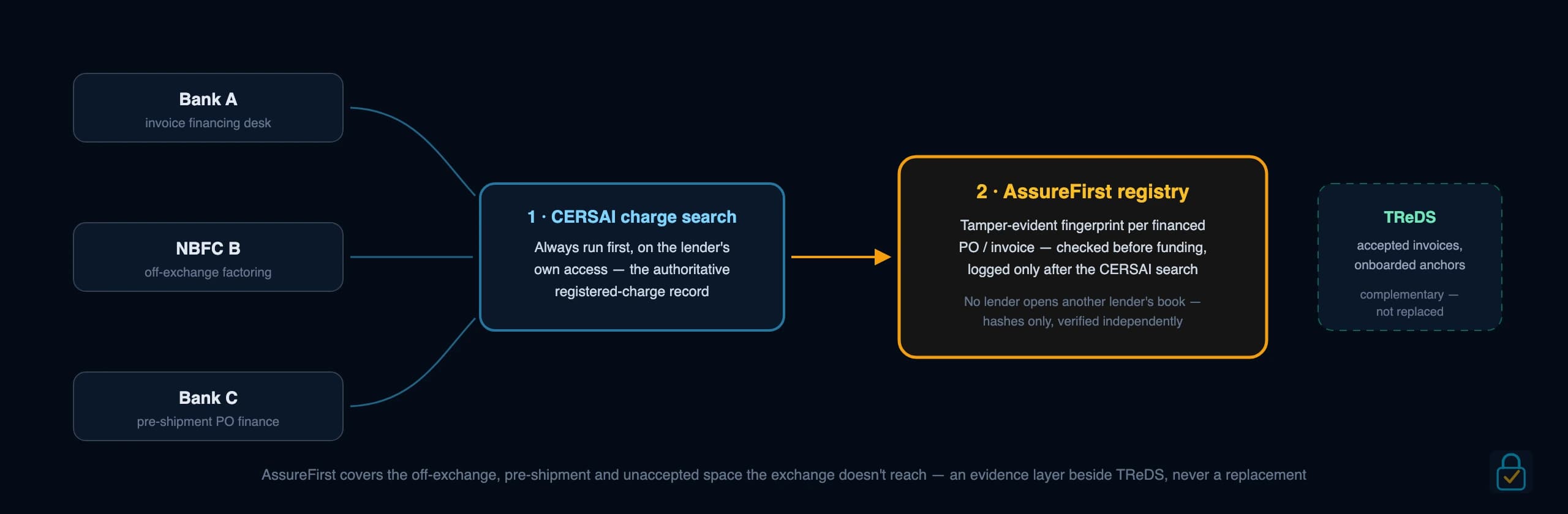
A walkthrough of what actually happens when a lender's AI agent triages a receivable over MCP: a duplicate-financing check, a pre-credit signal, a three-minute link to the evidence Pack — and a credit decision that never once belongs to the agent.
AssureLocker Team
Introducing MCP for AI Agents: One Governed Door Into Five Evidence Families
Lending teams are already pointing AI agents at their internal tools — often with far more access than anyone intended. AssureLocker's new MCP server gives an agent one authenticated connection, scoped keys that can only narrow an account's existing access, and a consent boundary the holder controls. Indicators only; the lender decides.

AssureLocker Team
If an AI Agent Can Ask, Should It Be Allowed to Answer?
The anxious question about agentic AI and identity is usually "will an agent leak or misuse someone's data." That's the wrong question, because it assumes the agent already has the data to misuse. The real design question is narrower and far more answerable: can an agent ever grant itself something only a human was supposed to grant.

AssureLocker Team
Why India's Most Creditworthy MSMEs Still Can't Get a Loan
Every lender an MSME approaches re-verifies the same GSTIN, the same Udyam registration, the same director details, from scratch, every time. That's not due diligence — it's the same fact, checked once per lender, paid for by the same business over and over. What changes when identity verification stops being a per-relationship tax.

AssureLocker Team
The $2.5 Trillion Trade-Finance Gap Isn't About Risk Appetite
The standard explanation for the global trade-finance gap is that banks are risk-averse about cross-border credit. That explanation doesn't survive contact with how much of the gap sits with exporters banks would gladly finance — if proving the trade was real didn't cost more than the deal was worth.

AssureLocker Team
The Real Cost of a Credit Decision Isn't the Capital — It's the Verification
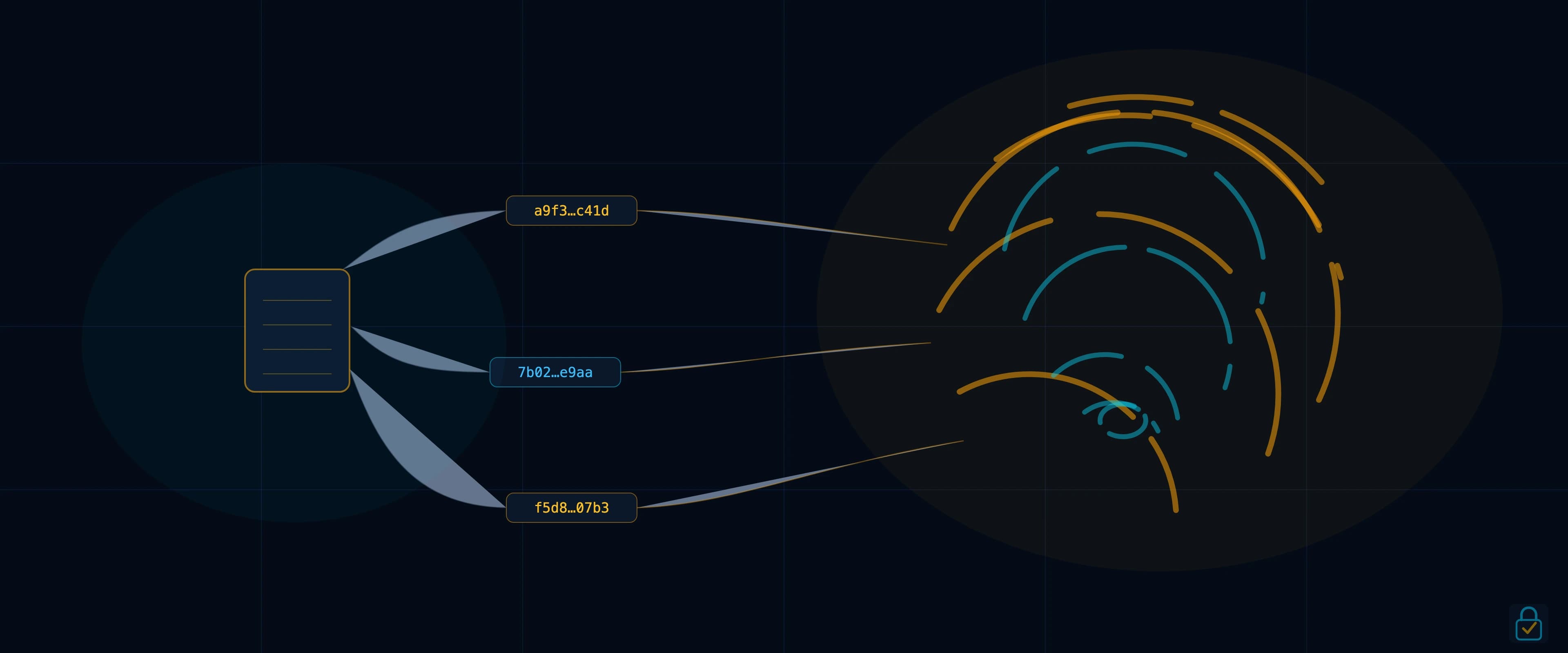
Lenders don't sit on capital because they're short of money to lend. They sit on it because verifying a deal costs more, per rupee financed, the smaller the ticket gets. Why the binding constraint on MSME credit is evidence, not appetite — and what changes when a pre-credit read costs nothing to run.
AssureLocker Team
Duplicate Financing Is a Coordination Problem, Not a Fraud Problem
Two lenders, two cities, the same receivable, financed twice — and neither one did anything wrong. Why duplicate financing is a structural blind spot rather than a fraud case, what closes it, and why an AI agent needs to be able to ask the question in real time.
AssureLocker Team
The Banks Are Arriving in Supply-Chain Finance — Why the Verification Layer Matters Now
A named bank launching its first fully-digital supply-chain-finance platform this quarter is worth more than any market-size chart: it is current evidence that institutions are entering the category. As they do, the binding constraint shifts from permission to verifying the underlying trade.

AssureLocker Team
When Supply-Chain Finance Is Mis-Classified, the Fix Is an Audit Trail
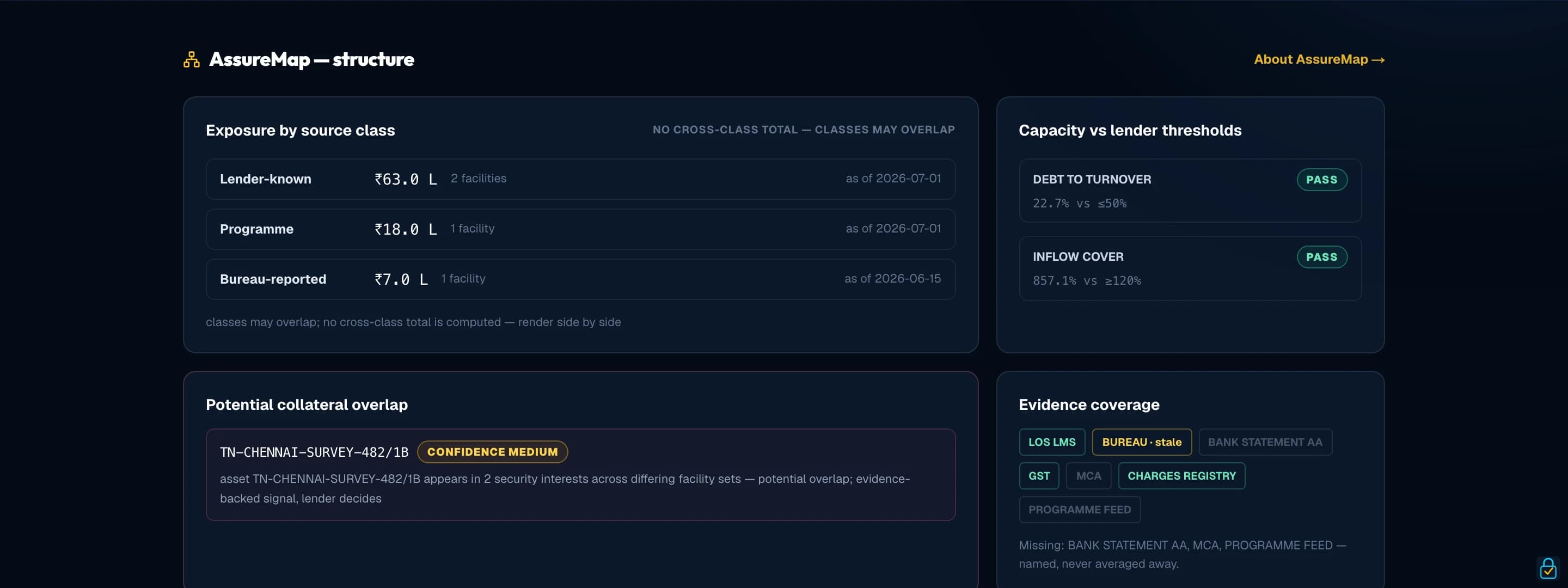
Reported supervisory scrutiny of how some lenders classify supply-chain finance is a reminder that the category rewards discipline, not just appetite. The control it calls for — evidence tiers and a reproducible audit trail — is exactly what a neutral verification layer is built to provide. Signals and evidence only; the lender decides.
AssureLocker Team
Introducing AssureSupplierGraph: Your Supplier Base as One Evidence-Backed Map
For corporate anchors: the suppliers a financing programme could reach — and the ones it stalls on for want of a verified identity — assembled from records you already hold, as one map. Evidence, not funds; signals, not decisions.
AssureLocker Team
Introducing AssureLens: A Borrower Can Look Stable While Risk Accumulates Around Them
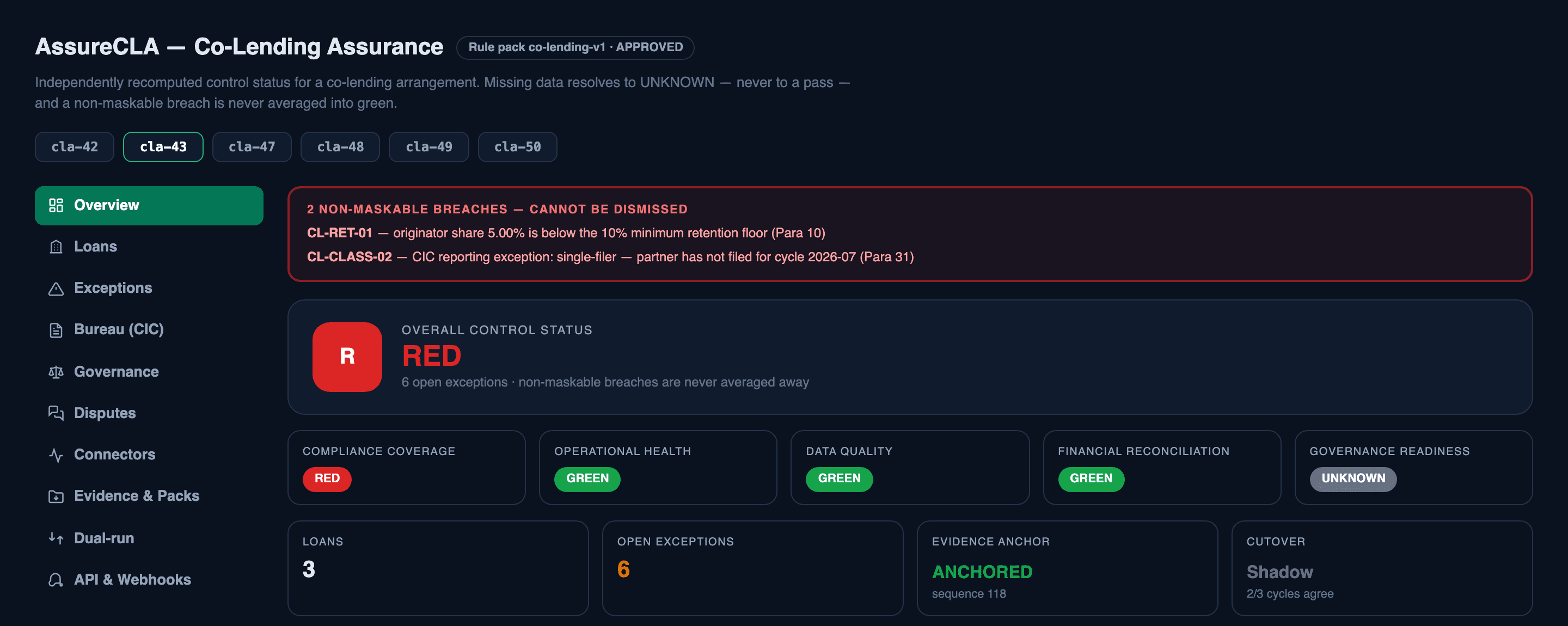
Our fourth suite is live at design-partner stage. AssureMap assembles the structural truth around a verified borrower — exposure by source class, never blended — and AssurePulse watches how fast credit is building against the borrower's own baseline and capacity. Signals only; the lender decides.
AssureLocker Team
AssureCLA: The Independent Control Plane for India's New Co-Lending Regime
The 2025 RBI Co-Lending Directions turned every bank–NBFC arrangement into a continuous two-book control problem. AssureCLA is our answer: 24 paragraph-cited controls, an honest status model where unassessed is never green, and evidence that travels with the asset — from a TSP with no allegiances.

AssureLocker Team
The MSME Growth Gap: Why India's Backbone Can't Borrow Beyond Its Collateral
India's MSMEs drive 30% of GDP but face a ₹20–25 lakh crore credit gap — not because they're un-creditworthy, but because lenders can't cheaply verify the orders and invoices that would justify lending beyond collateral. The real bottleneck is verification, not capital.

AssureLocker Team
Beyond Collateral: How Verified Trade Evidence Unlocks MSME Lending
India's MSMEs are rich in trade evidence and poor in collateral — and IRNs, e-way bills and POs now leave a verifiable digital trail. The residual gap is proving that evidence is genuine and financed only once.

AssureLocker Team
PO Financing Explained: Funding the Order, Not Just the Invoice
Purchase-order financing funds the commitment to sell, before any invoice exists — which is exactly why it is the hardest trade to underwrite. Here is where the real risk hides, what India's invoice registries already cover, and the order-stage blind spot they don't.

AssureLocker Team
The 45-Day Rule: What Section 43B(h) Means for Buyers and MSME Suppliers
Section 43B(h) moved the cost of paying MSMEs late off the supplier's chase-list and onto the buyer's tax computation. Here is what the 45-day rule actually says, the financing wave it is driving, and the verification gap that decides whether the money moves in time.

AssureLocker Team
The Business Case for OID4VP in Financial Services
OID4VP hit Final 1.0 in July 2025 — a frozen, format-agnostic standard for the moment a customer presents a verified credential with consent. Here is the cost, UX, and compliance case for Indian lenders, and the residual gap it closes that CKYCRR does not.

AssureLocker Team
What Australia's Digital ID Act and AUSTRAC Reforms Signal for Reusable Identity
On 1 July 2026, roughly 100,000 Australian businesses fall under AUSTRAC's AML net for the first time — while the Digital ID Act 2024 rewires how identity is proven. Together they preview a global shift Indian lenders should read closely: verify once, at source, and let the proof travel.

AssureLocker Team
Backing Verifiable Credentials with Aadhaar: A Technical Overview for FI Architects
Aadhaar offline XML, the new Aadhaar Verifiable Credential and DigiLocker already give FI architects issuer-signed identity at the point of capture. The unsolved part is reusing that verification — with its provenance intact — so the next lender trusts it instead of rebuilding the pipeline.
AssureLocker Team
DPDP Act 2023: How Data Minimisation Is Rewriting KYC Data Handling in India
Under the DPDP Act, every redundant Aadhaar and PAN scan a bank hoards is now unpriced liability — up to ₹250 crore of it. The fix isn't deleting the KYC record; it's proving the fact without keeping the document.
AssureLocker Team
Portable Verifiable Credentials in Indian Finance: What They Fix, and What Already Exists
India has more identity plumbing than almost any economy — CKYC at 103 crore records, DigiLocker past 9.8 billion documents. So why does the same MSME assemble the same KYB pack for every new lender? The real gap portable verifiable credentials close, without the overclaim.

AssureLocker Team
Why Financial Institutions Are Going Passwordless — and What RBI's 2025 Rules Change
Passwords and SMS OTPs are the soft underbelly of Indian digital finance — and RBI's new authentication regime quietly opens the door to something phishing-resistant. Here is what passkeys actually fix, and what they don't.

AssureLocker Team
What Is a Credential Wallet? Holder-Controlled Identity for Indian Lending
DigiLocker has 51 crore users and CKYC gives every customer a reusable KYC number — yet lenders still re-collect the same documents from the same customer, five relationships in a row. Here is what a holder-controlled credential wallet actually changes, and the honest gap it closes.

AssureLocker Team
Reusable KYC vs Traditional KYC: A Cost-Benefit Analysis for Banks
A bank can verify the same customer four times in four years and learn nothing new each time. Where the cost of traditional KYC actually hides, why CKYC closes only part of the gap, and what holder-controlled, consent-backed identity changes for the balance sheet.